Dodge Grand Caravan Camper Conversion Guide: The Perfect DIY Adventure for Under $3,000
If you have ever dreamed of embracing vanlife but thought a full-size van was out of reach, converting a Dodge Grand Caravan into a camper might be your perfect solution. The Caravan’s compact size, reliability, and affordability make it one of the best vehicles for a budget-friendly minivan camper conversion.
Unlike larger vans, the Dodge Grand Caravan is easy to drive, fits in regular parking spaces, and still provides a surprisingly flexible interior. Whether you are planning weekend road trips or longer escapes, turning your minivan into a camper gives you a sense of freedom without the cost of an RV or hotel stays.
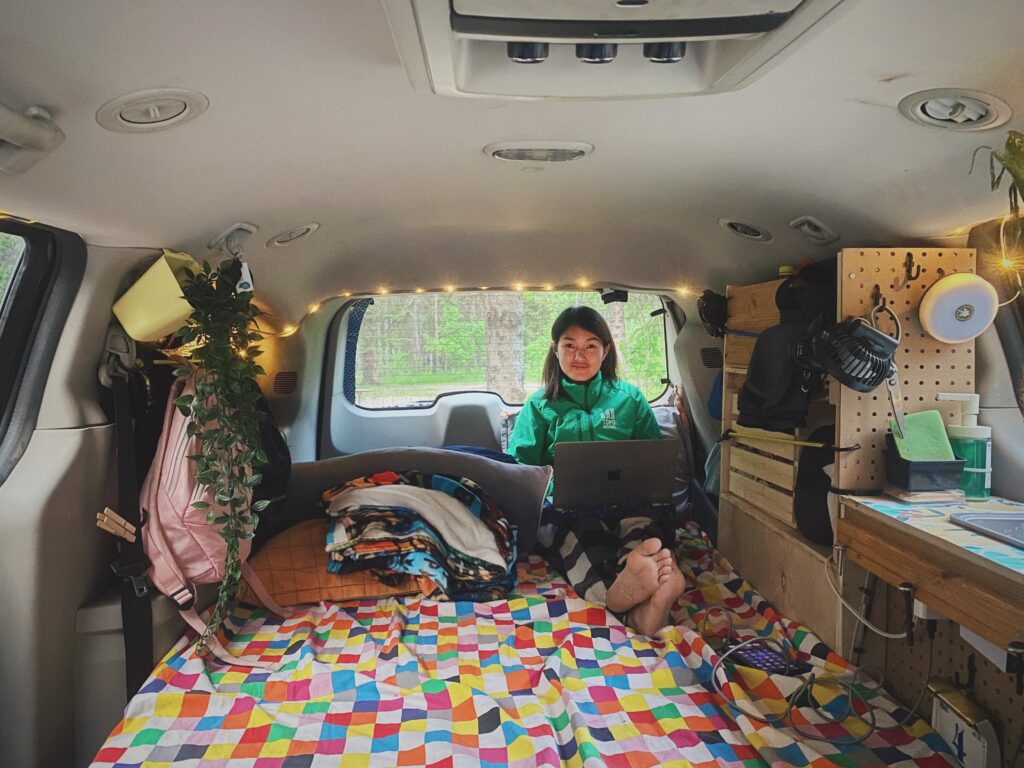
The best part is that our entire build, including tools, materials, and setup, cost less than $3,000. It proves that real adventure does not require a big budget, only creativity and a bit of patience.
Choosing the Right Dodge Caravan Model for camper Conversion
Before you start building, it is important to choose the right base vehicle.
Best Models for minivan to camper conversion
The Dodge Grand Caravan (2008–2020) remains one of the most popular choices for DIY camper conversions because of its spacious cabin and dependable V6 engine. The Stow ’n Go seating feature is especially helpful because it allows the seats to fold flat into the floor, giving you a ready-to-build open space.
What to Look For
- Low mileage with a full service record
- Working air conditioning and electrical system
- Clean undercarriage with minimal rust
- Avoid any vehicle with transmission or wiring problems, since those can be costly to fix later
A solid starting vehicle will save you money and frustration as your camper conversion progresses.
Essential Tools and Materials for Your Minivan Camper Conversion
Before you start your DIY Dodge Caravan camper build, gather the basics:
Tools
- Cordless drill and assorted bits
- Jigsaw or circular saw
- Screwdrivers and wrenches
- Measuring tape and permanent marker
Materials
- Plywood or lightweight composite panels
- Reflectix or foam board insulation
- Vinyl flooring or automotive carpet
- Screws, hinges, and L-brackets
Estimated Cost: A simple Dodge Caravan camper conversion can range between $1,000 and $3,500, depending on design and materials. Our build stayed below $3,000, including everything.
Planning Your Dodge Caravan Camper Layout
A smart layout can turn your minivan camper from cramped to comfortable.
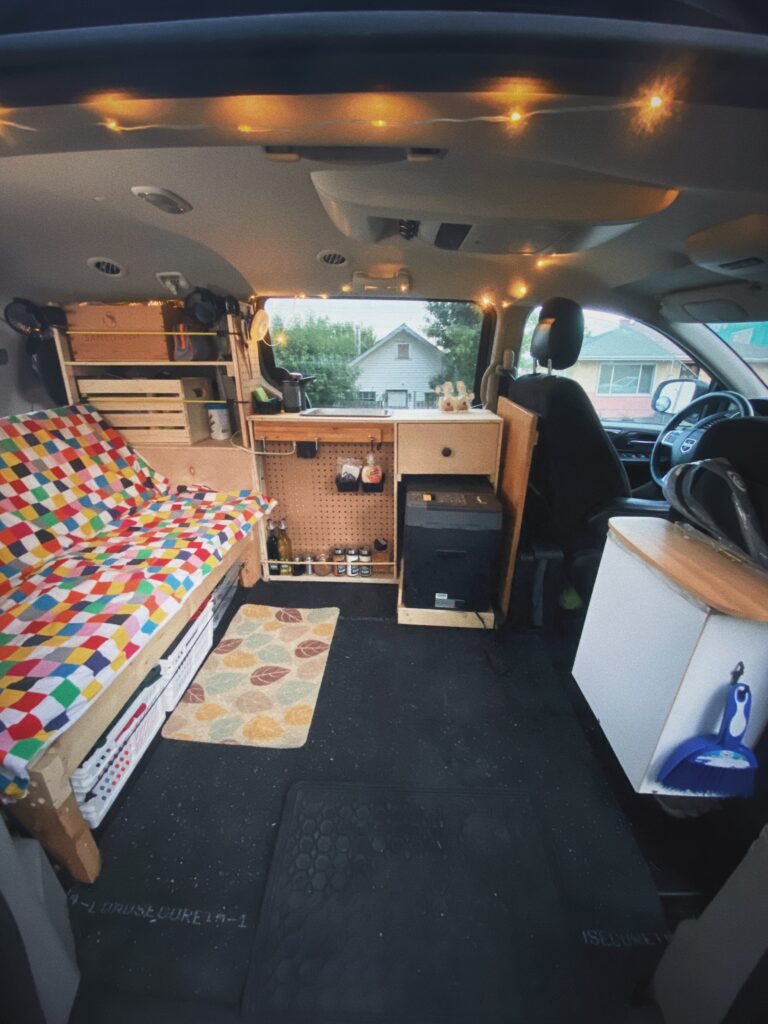
- Solo travelers: A single folding bed with compact storage and a small kitchen box works perfectly.
- Couples: Try a convertible bed and sofa setup with under-bed storage.
- Small families: Add removable bins, roof storage, and modular furniture for extra space.
Sketch your design, measure carefully, and plan each corner of your Caravan before you cut or drill anything. Every inch counts.
Step 1: Measure Your Van
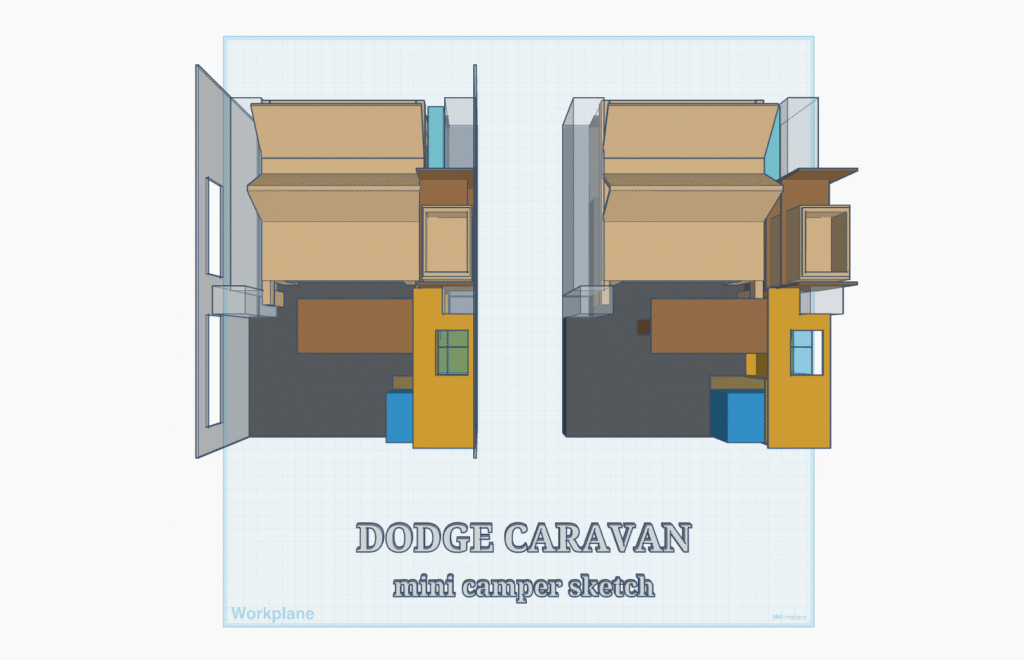
Start by measuring the inside of your Dodge Caravan. Know the length, width, and height so you can see what fits realistically. Sketch a rough layout on paper, showing where you want your bed, kitchen, cooler, and storage to go. The goal is not to be perfect but to understand your space clearly before cutting any wood.
Step 2: Sketch Your Floorplan
Once you have your basic measurements, plan around the biggest items you need. These include your bed, fridge, water setup, and power station. Think of these as the foundation pieces that define your camper layout.
Sketch your layout again with these in place, either by hand or digitally. Leave some flexibility because your design will likely evolve as you start building.
Step 3: Gather Tools and Materials
Start collecting the tools and materials you will need for the build. Van building is a process that combines planning and doing. You do not need a perfect plan to begin. Focus on functionality first and looks later.
Visit your local hardware store to see materials in person and get a feel for what you will use. Familiarize yourself with plywood thickness, screws, and hinges. This step helps you feel more confident and ready to start.
Remember, your first build is not about perfection. It is about creating something that works for you. Aim for durability and practicality rather than appearance.
Step 4: Start the Real Build
Once your tools and materials are ready, begin building. This is the stage where your plan becomes reality.
Tips for a smoother build:
- Break the project into smaller phases such as bed, storage, kitchen, and finishing touches
- Keep all your tools organized before you start
- Use cardboard or masking tape to test your layout before cutting wood
- Measure twice and cut once
- Label screws, hinges, and parts so you do not lose them
- Do not rush your first version; it is normal to adjust and rebuild
- Build for your own comfort, not for online photos
- Take breaks when you feel tired
- Celebrate small milestones along the way
Step 5: Load and Test Drive
After your build is nearly complete, load everything and go for a short test drive. This will help you understand how your setup feels in motion.
Check if anything shifts or makes noise, and pay attention to the weight balance of your van. Try sleeping inside for a night to see how comfortable it feels. Make sure your electrical setup works, your fridge stays cool, and everything is easy to access.
A good test drive reveals small adjustments that can make your trip safer and more enjoyable.
Step 6: Make Your Van Road-Ready
Your Dodge Caravan is now both your car and your home, so it must be in its best condition before a long trip.
Go through a basic vehicle checklist:
- Oil and brake check
- Tire pressure and tread
- Battery, lights, and wipers
- Coolant, transmission, and washer fluids
- Alignment and spare tire
Plan oil changes ahead, take driving breaks every few hours, and keep your gas tank at least one-quarter full. Drive at a safe speed and avoid long night drives when possible.
Keep a small emergency kit, snacks, water, and a few tools handy. Traveling smart keeps both you and your camper safe on the road.
After the Build
After 8 weeks and 13,242 km across Canada, our Dodge Caravan camper held up perfectly. We learned through trial and error what worked, what didn’t, and how simple living teaches resilience.
This isn’t just about building a van, it’s about building a way of life.
Take breaks, stay patient, and let your first build be your teacher.
Welcome to vanlife. Your journey starts here.
